
This Dose of History contains historical material, created between roughly 1891 and 1913, that reflects the social norms, scientific knowledge, and cultural attitudes of its time. Readers may encounter language, imagery, or portrayals that are outdated, biased, or offensive today. The content is presented here for educational and research purposes as part of the historical record.
Throughout the nineteenth century, opium became an increasingly valuable commodity both as a recreational drug and for its medicinal value. The Opium Wars waged by Britain in the middle of the century forced China to open its markets to opium, and legitimized a schema of trade which was favorable to the Western powers: opium cultivated in the nearby British colonies was traded in China for tea, silk, and other valuable commodities, and these commodities were then sold in Europe at a considerable profit.
The increase in opium trafficking facilitated by these wars would allow other countries to involve themselves in the trade, and the United States would emerge as a significant middleman. However, domestic demand for opium remained low until the 1860s. The Civil War drastically increased the amount of opium imported into the United States and may have played a role in introducing morphine to a generation of American soldiers. By the late nineteenth century, opium was central to pharmaceutical practice and was easily available without a prescription, either directly from a pharmacist or in the form of a patent medicine. In 1914, 118,282 pounds of opium were legally consumed in the United States, according to the pharmaceutical trade magazine Druggist’s Circular.
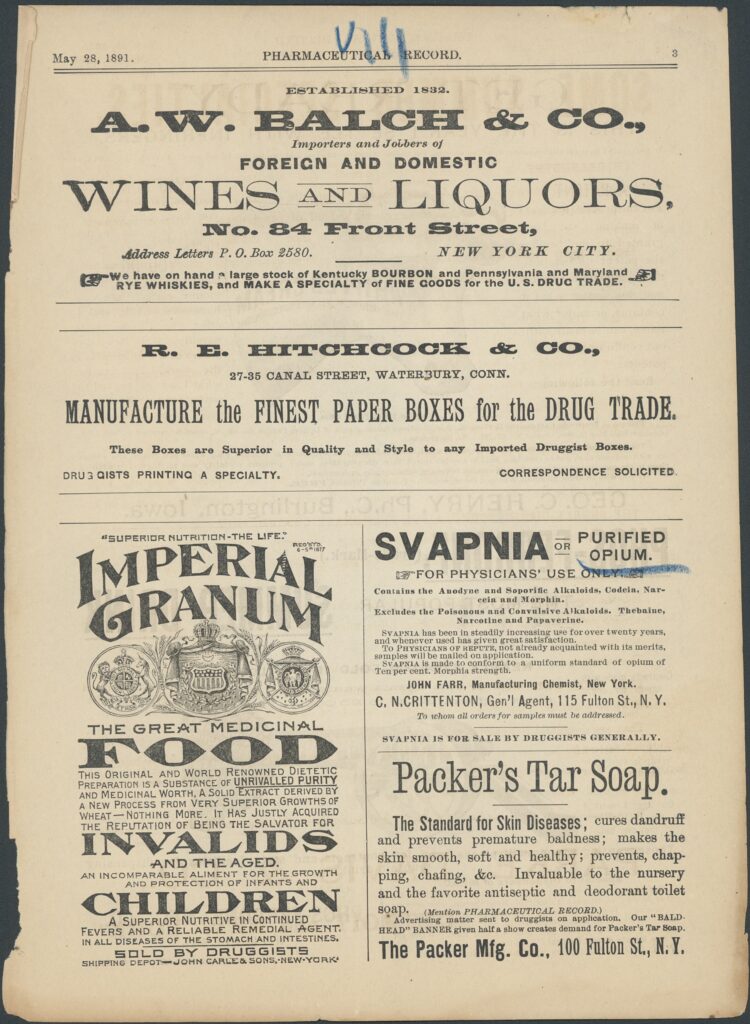
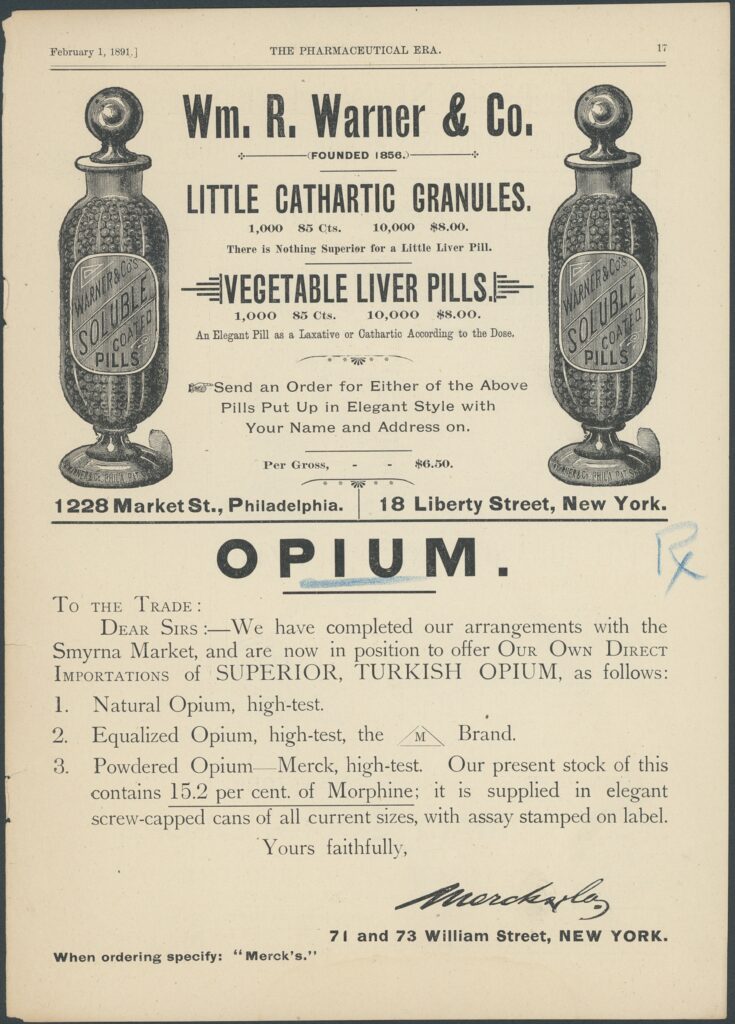
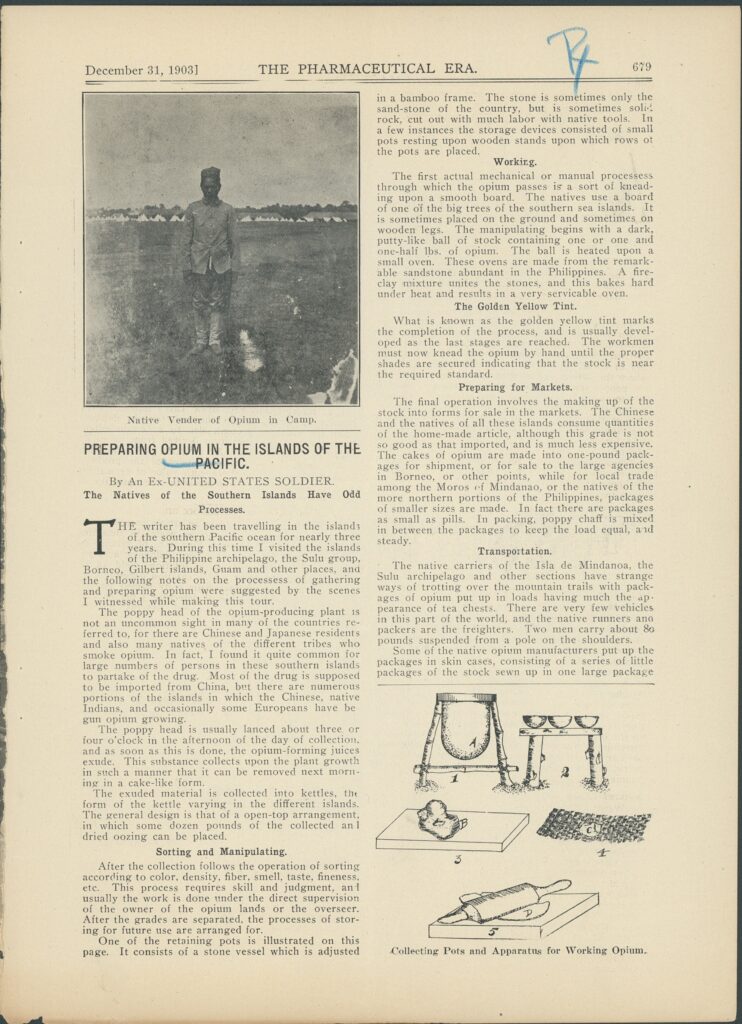
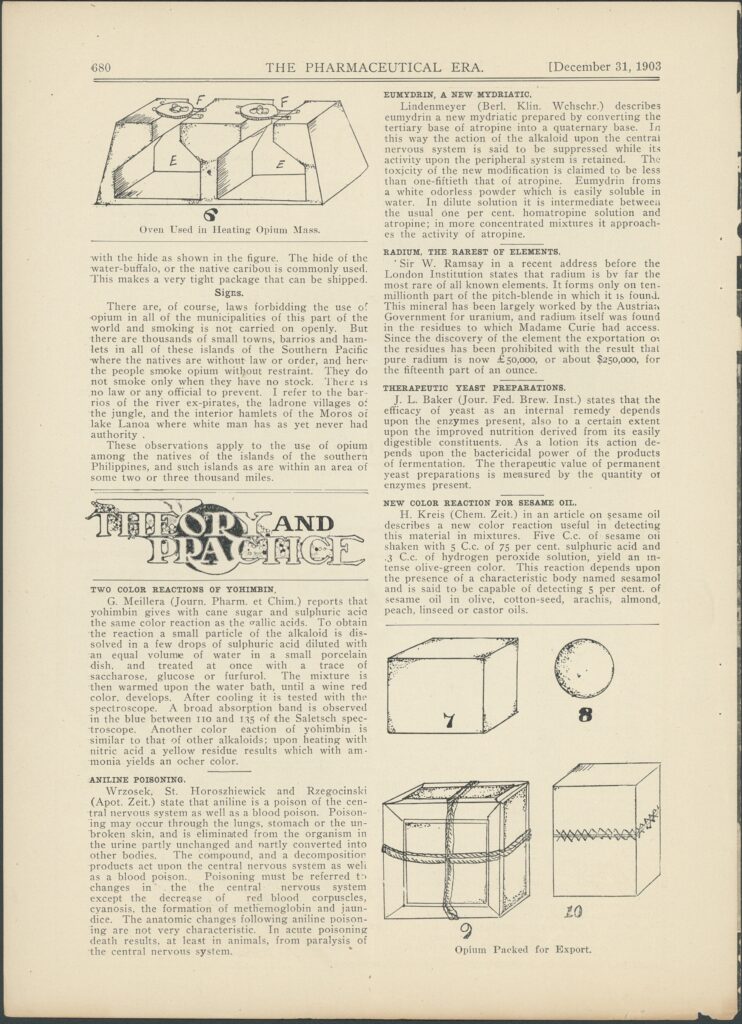
Despite its widespread use, the opium trade was rather volatile. Firstly, the cultivation of opium was incredibly labor intensive and the quality and yield of the crop varied greatly depending on weather conditions–a frost or heavy rain at the wrong time could, and often did, jeopardize the entire year’s harvest. Secondly, the crop’s importance to battlefield medicine meant that its price increased sharply, especially during wartime. For instance, during the first year of World War I the price of opium was reported to increase by 45% in American markets, despite the fact that the United States would not enter the war until 1917. Finally, the actual quality of the crop varied widely. The amount of morphine in the plant usually ranged from 4% to 12% depending on the batch.
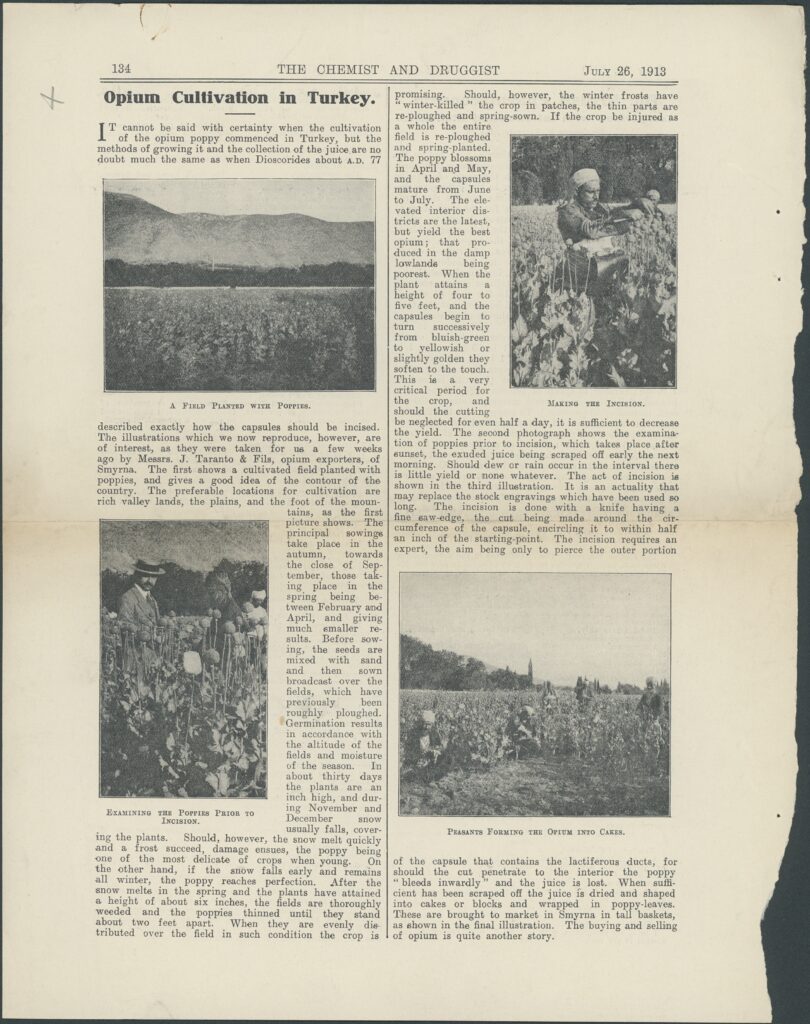
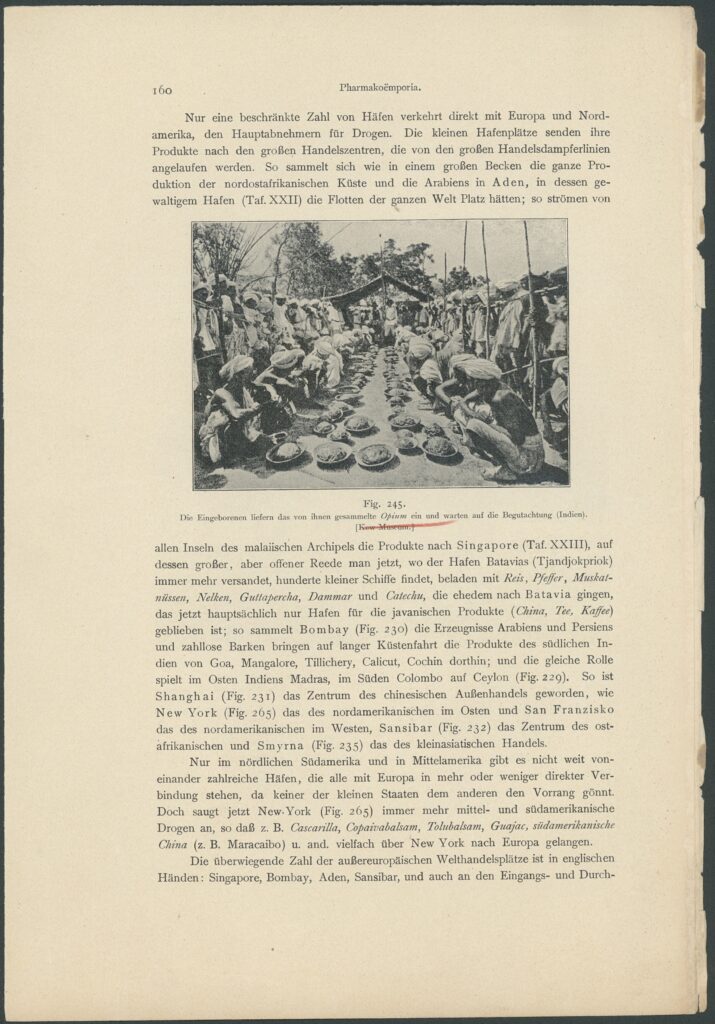
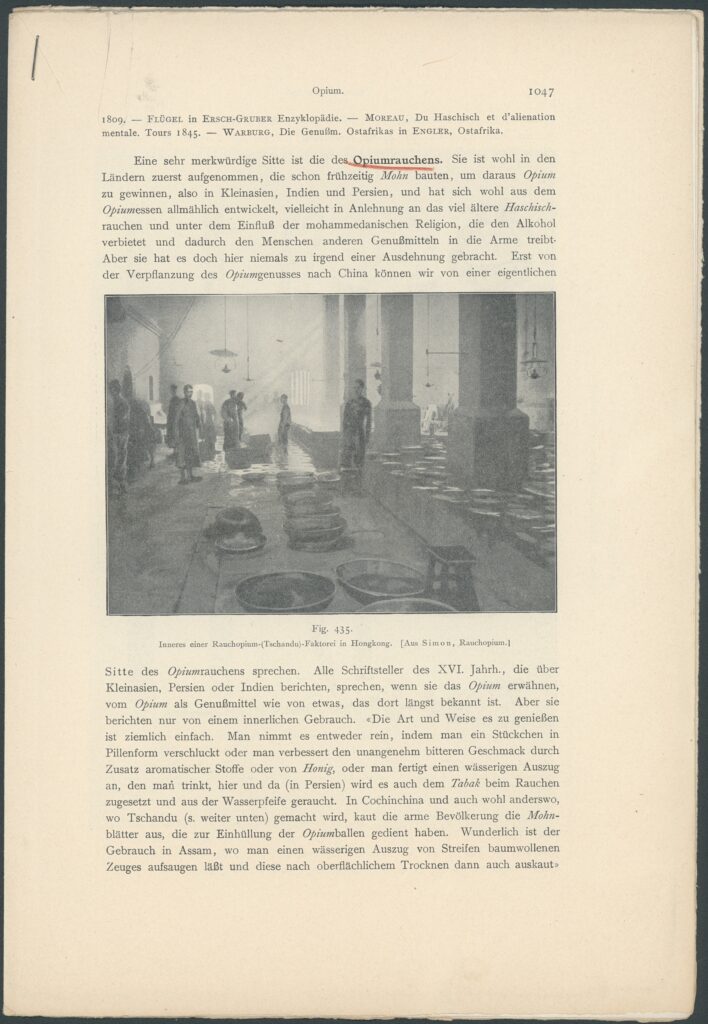
The twentieth edition of The United States Dispensatory, published in 1918, claims that opium imported from the Turkish city of Smyrna was “beyond all comparison, most abundant in our markets” and that opium produced in other regions–notably India and Persia–was either reserved for domestic consumption or exported to China. In the United States, opium use was associated specifically with Chinese people as they immigrated to the country in greater numbers in the late nineteenth century. In reality, however, opium use was not restricted to one racial category and the belief that opium use was more prominent among Chinese people was motivated by racist and anti-immigrant views. A more thorough exploration of American views on opium use will be the subject of the next part of this series.
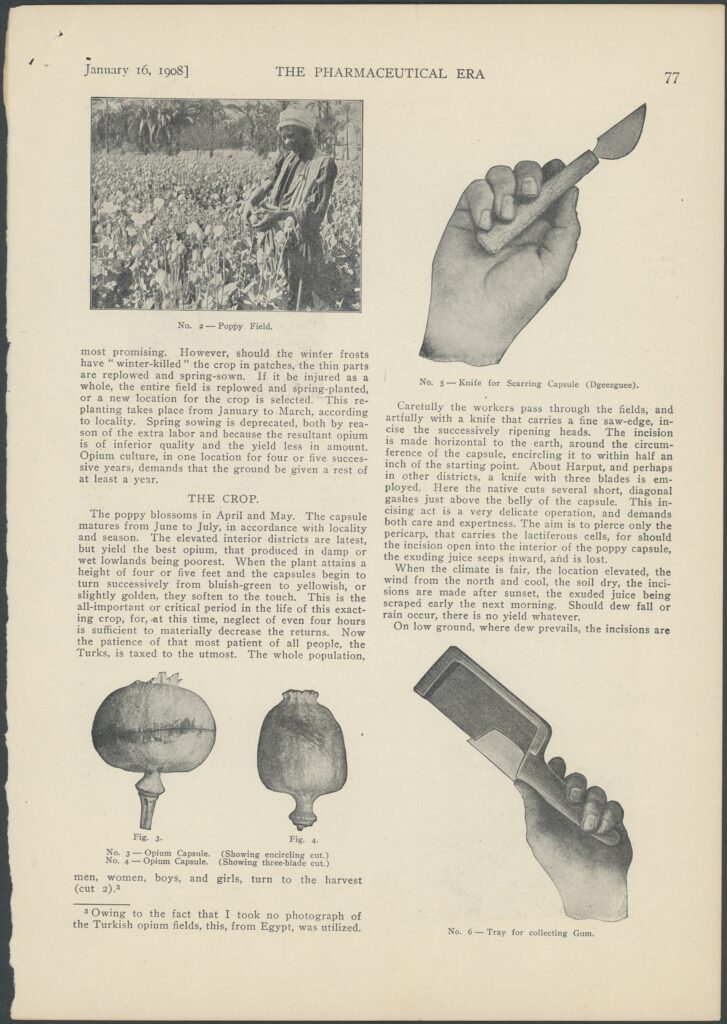
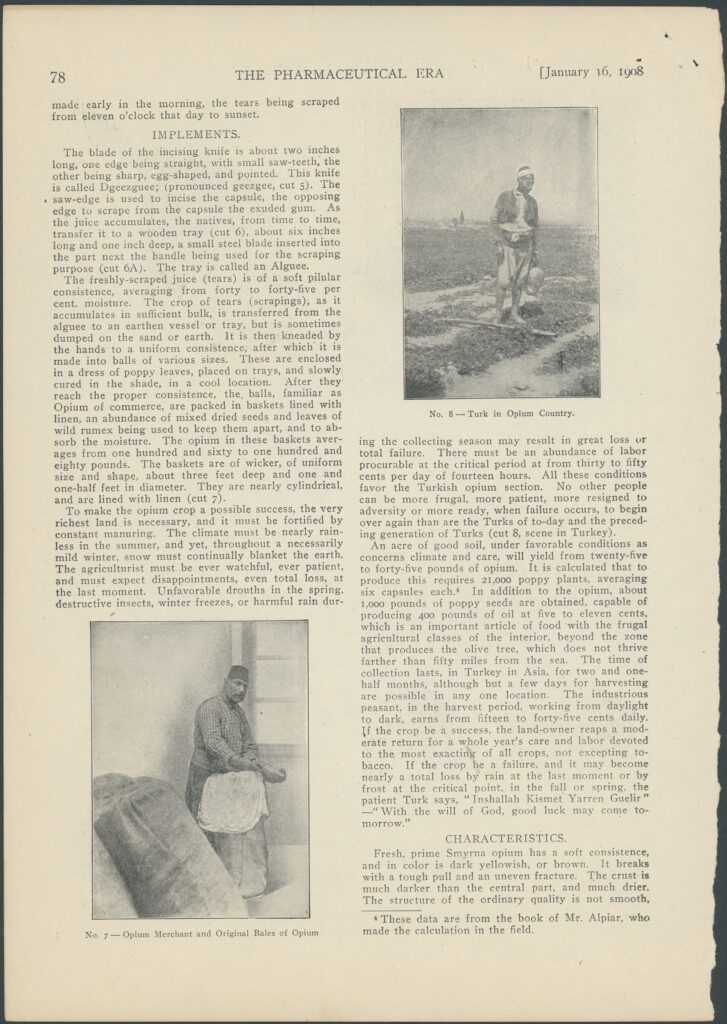
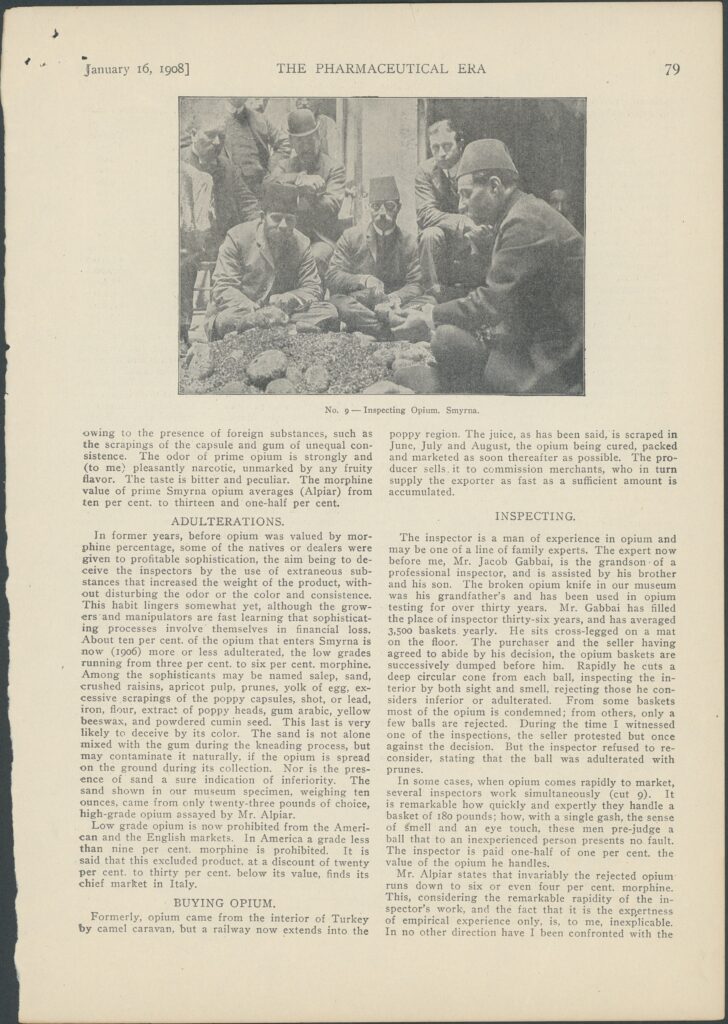
In 1906 Thomas H. Norton, the United States consul in Smyrna, Turkey, suggested opium be cultivated in the United States. “In Turkey the old-time methods of opium poppy culture are still in vogue,” reports the New York Tribune, “but the consul [Thomas H. Norton] believes that American ingenuity could greatly improve them.” Norton was hardly alone in thinking this. During the Civil War, unsuccessful attempts were made in the American South to cultivate opium in order to fill the massive demand left unfulfilled by the Union blockade. Between the Civil War and 1910, the initiative to grow opium outside of traditional cultivating regions was periodically renewed.
Several of these attempts were successful insofar as they yielded a quantity of morphine which was medically useful. For instance, one project in North Carolina yielded a respectable 5.1% morphine content–although this is on the lower side, the author of an article about the project notes “it is nearly equal to that of many varieties of opium from India.” If this is the case, then why didn’t the production of opium take place on a wider scale in the United States? Climate and soil quality likely played a role, but the Dispensatory admits “the high price of labor forbids the profitable production of opium in the United States.”
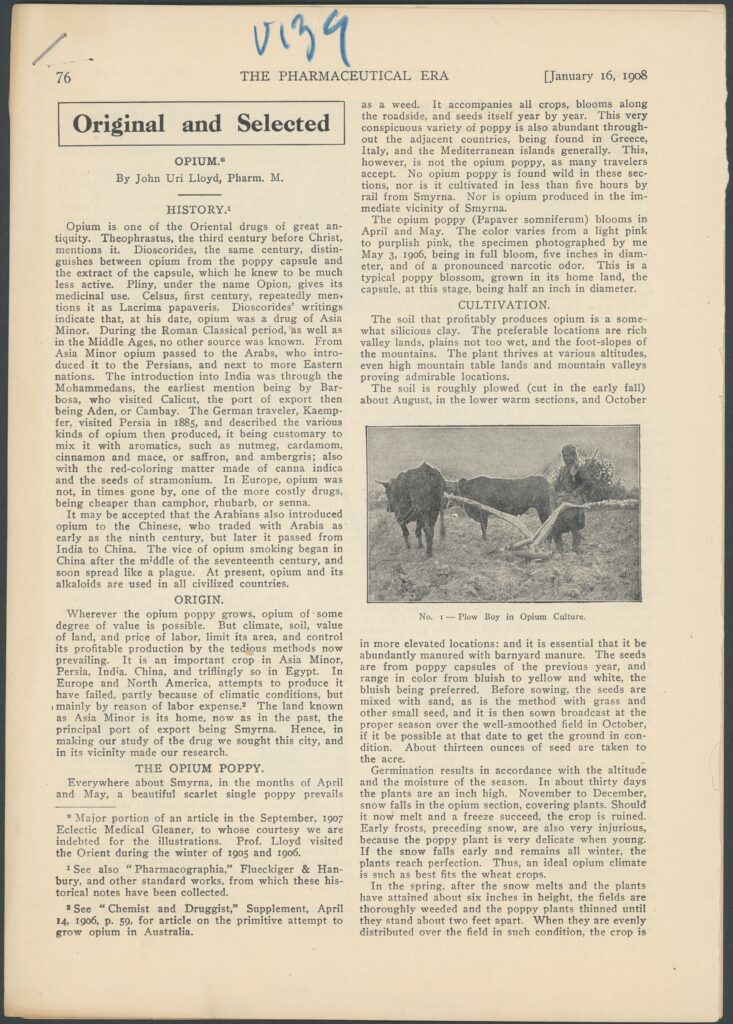
In 1908, a pharmacist named John Uri Lloyd writing for The Pharmaceutical Era described the production of opium in Turkey in detail, complete with photographs. “The industrious peasant, in the harvest period, working from daylight to dark, earns from fifteen to forty-five cents daily.” The same article contains a photograph of a plow-boy and notes that “men, women, boys and girls turn to the harvest”, suggesting that child labor was employed on a wide scale which may have helped keep wages low. Lloyd cites the same conclusion as the writers of the Dispensatory: “In Europe and North America, attempts to produce [opium] have failed, partly because of climatic conditions, but mainly by reason of labor expense.”
The opium trade weaved the Americas, Europe, and Asia in a complex tapestry of international trade. The importance of morphine and other opium-derived products in late nineteenth century medicine would make the compound an indispensable aspect of the pharmacist’s arsenal, and opiates are still widely used in modern medicine. However, the administration of opium was generally not coupled with concern over its addictive properties–in fact, the concept of addiction as we understand it today did not exist in the late nineteenth century. As a result, journalists and doctors started speaking of an “opium problem” as the drug’s effects, both on the individual and society, were made increasingly apparent. The next part of this series will examine American attitudes towards opium use, the development of a modern theory of addiction, and how these factors interacted with the racial politics of the time.
This Dose of History is brought to you by AIHP Intern Leo Ryan.
Bibliography:
Derks, Hans. “Tea For Opium Vice Versa.” and “United States of America.” in History of the Opium Problem: The Assault on the East, ca. 1650-1950 (Brill, 2012). http://www.jstor.org/stable/10.1163/j.ctv4cbhdf.
Lewy, Jonathan. “The Army Disease: Drug Addiction and the Civil War.” War in History 21, no. 1 (January, 2014): 102-119. https://www.jstor.org/stable/26098368.
Remington, Joseph P. et al. “Opium.” in The Dispensatory of the United States of America: Twentieth Edition (J. B. Lippincott Company, 1918): 805-808. Obtained through the AIHP’s book collection.
[Reprint of a 1914 government report on opium, cocaine, and compounds derived from them]. The Druggist’s Circular, September, 1916: 568. Obtained through the AIHP’s periodicals collection.
“Nineteen Hundred and Fifteen.” The Druggist’s Circular, January, 1916: 1. Obtained through the AIHP’s periodicals collection.
“Says Opium Should be Raised Here.” New York Tribune, July 7, 1906. Obtained through the AIHP’s Edward Kremers Reference Files.
“Opium From North Carolina.” The Druggist’s Circular and Chemical Gazette, March, 1875: 60. Obtained from the AIHP’s Edward Kremers Reference Files.Lloyd, John Uri. “Opium.” The Pharmaceutical Era, January 16, 1908: 76-80. Obtained through the AIHP’s Edward Kremers Reference Files.